
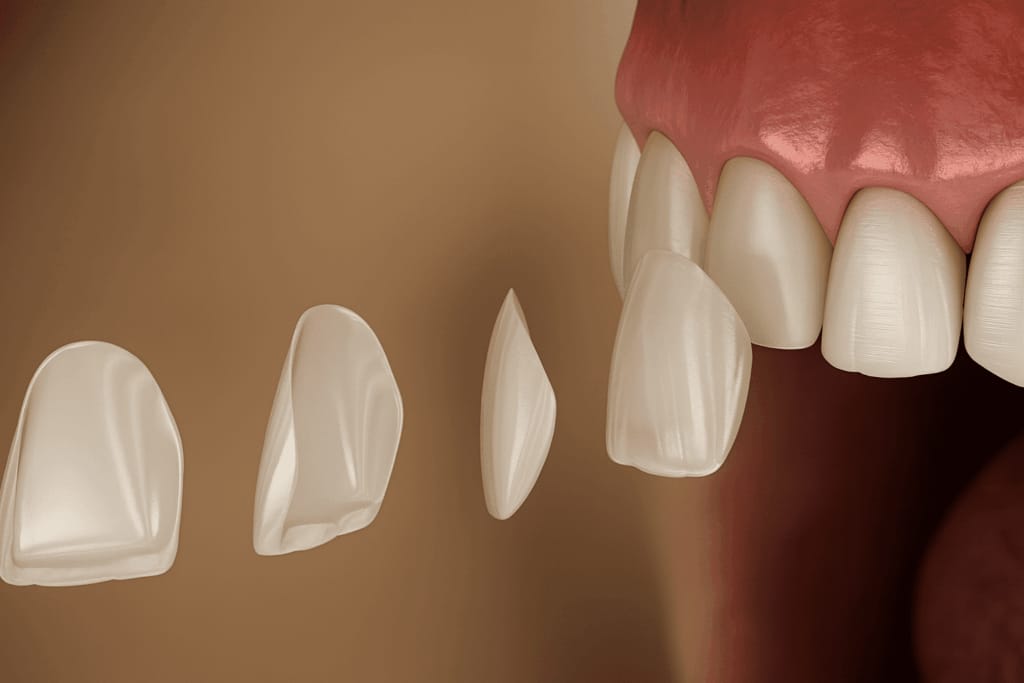
Can Dental Veneers Fall Off?
Why Dental Veneers Fall Off
1. Age of the Veneer
Veneers don’t last forever. Porcelain veneers can last up to 15 years, no-prep veneers around 10 years, and composite veneers roughly 5 years. As they age, the bonding may weaken, and the veneer can begin to peel away from the tooth.
2. Teeth Grinding or Clenching
Bruxism, or habitual grinding and clenching, puts excessive pressure on veneers. Over time, this can wear them down, loosen the adhesive, and eventually cause them to fall off. Night guards or stress-reduction techniques can help protect your veneers.
3. Poor Oral Hygiene
Inadequate brushing, flossing, and rinsing allow plaque and bacteria to build up around veneers. This can lead to decay at the edges of the veneers, weakening the bond and increasing the risk of them coming off.
4. Aggressive Chewing Habits
Using your teeth to bite hard objects like ice, pens, or hard candy can crack veneers or loosen their adhesive. Being mindful of chewing habits helps maintain their strength and longevity.
5. Tooth Decay Beneath the Veneer
Even though veneers cover the front of teeth, decay can develop underneath if oral hygiene is neglected. This compromises the structure of the tooth and causes veneers to detach.
6. Improper Bonding or Placement
Veneers that are not correctly bonded by the dentist are more likely to fall off, sometimes within months of placement. Proper technique and high-quality adhesive are essential for a long-lasting veneer.
Maintaining proper dental care, avoiding excessive pressure on your teeth, and regular check-ups with your dentist can significantly reduce the risk of veneers falling off and help keep your smile intact for years.
What you should do if a veneer falls off
If your veneer falls off, the first step is to consult with a dentist. Dental professionals are best equipped to provide guidance and determine the appropriate treatment, so avoid trying to fix it yourself. If you cannot see a dentist immediately, there are some temporary measures you can take at home. Gently clean both the inside of the veneer and the tooth with warm water, being careful not to cause further damage. In some cases, you may be able to temporarily reattach the veneer using over-the-counter dental or denture adhesive.
Do not panic, but do not delay contacting your dentist. A lost veneer is not an emergency, so while you do not need an immediate appointment, scheduling one as soon as possible is crucial. When a veneer falls off, the tooth’s pulp may be exposed, causing irritation or potential infection that could compromise the tooth. Next, determine if the veneer is broken. Veneers are made of thin porcelain, which can crack or shatter when they fall. Gather all pieces to take to your dentist. Even if the veneer is intact, do not attempt to put it back on, as this can cause permanent damage.
Remove the veneer from your mouth and place it in a clean, hard plastic container. Do not hold it in your mouth, as there is a risk of swallowing or choking. Never attempt to use commercial glue, as dentists use safe, non-toxic adhesives designed specifically for veneers. To protect the exposed tooth temporarily, you can apply a thin layer of dental wax over its surface. Wax helps shield sensitive oral tissue and prevent irritation until you can see your dentist. It is readily available at most pharmacies and is easy to apply. For patients living in Dubai, Dr. Han Dental Clinic is one of the best cosmetic dental clinics in Dubai. Dr. Han can skillfully replace your veneers, helping you restore your smile with confidence and enjoy long-lasting results. With veneers, you can experience a complete cosmetic dental solution all under one roof.